
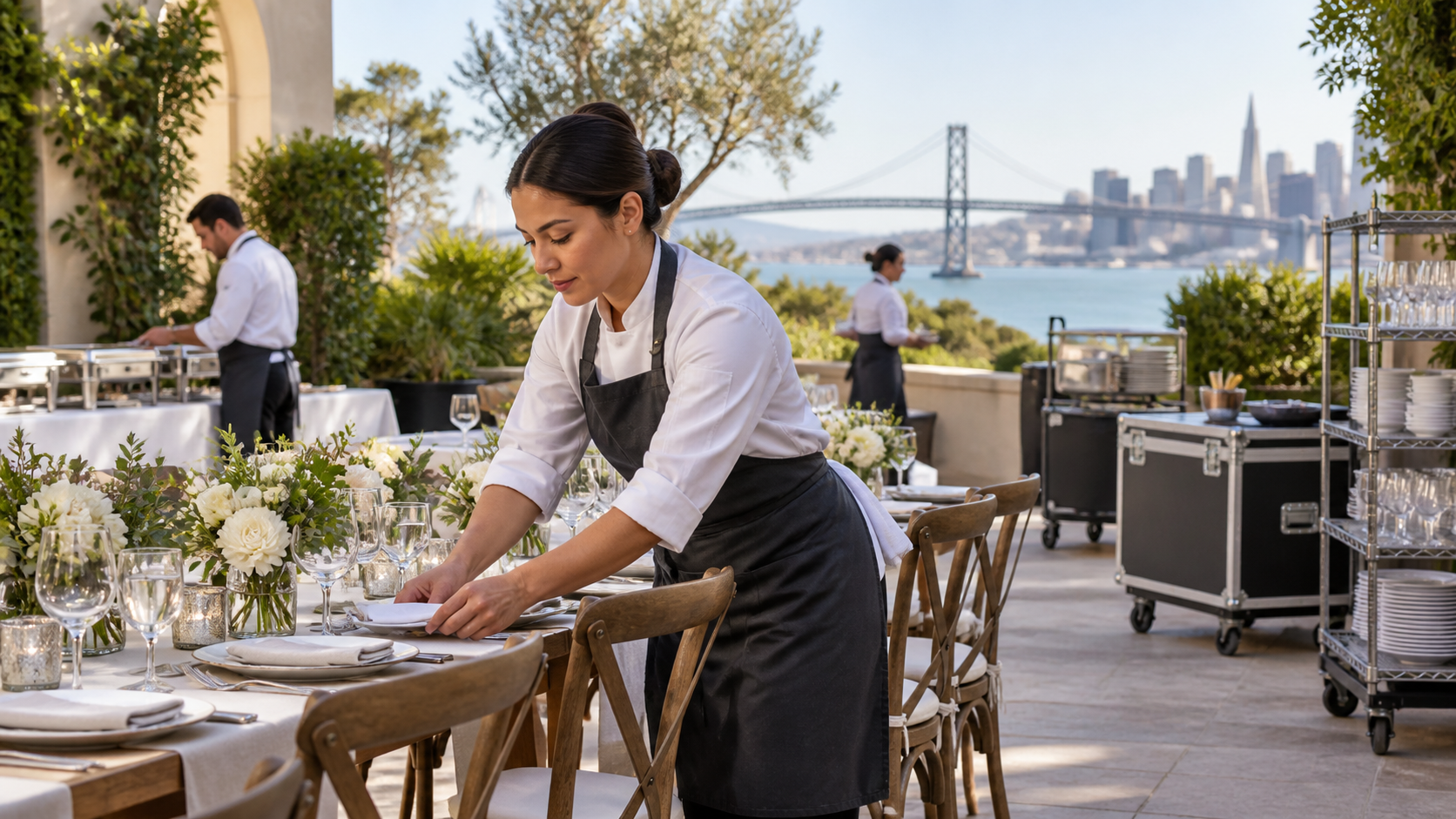
Why off-site work is a different insurance question than the storefront
A San Francisco café or shop that caters an event, staffs a booth at a neighborhood street fair, or runs a pop-up at someone else’s retail space has temporarily stepped outside the location and activity described in its base insurance submission. The building, the sidewalk, and the equipment at a normal shift are known quantities the policy was written around. A one-day setup at an unfamiliar venue introduces a different premises, a different indemnity relationship, and often a different set of expectations about who is responsible for what.
None of that means off-site work is uninsurable or unusual — plenty of San Francisco food and retail businesses do it regularly, from Fillmore Street’s summer street fair to private catering at venues across the city. It does mean the planning has to happen before the event, because a certificate request that shows up the week of a booking leaves little time to fix a genuine gap.
Define the event pattern before describing it to anyone
Describe clearly whether the business caters occasionally, attends recurring markets, delivers regularly, runs periodic pop-ups, or uses a client’s kitchen for a defined engagement. Note the location, expected attendance, food preparation method, equipment involved, and — critically — who actually controls the site: a private venue operator, a city permit for a street fair, or another business hosting a pop-up.
A recurring monthly market booth and a single large private event are different fact patterns for an underwriter, even if the food or products sold are identical. Treating every off-site engagement as the same "catering" line item on a submission tends to understate the recurring exposure and overstate the one-time exposure, or the reverse.
Inventory what actually travels to the site
List owned, rented, and borrowed equipment, the stock or ingredients transported, and any vehicle used to move them. Keep purchase or rental records, and identify where property is stored both before and after the event — a folding table and a portable burner left in a locked van overnight is a different property exposure than the same equipment stored inside a secured commercial kitchen.
For catering specifically, note whether alcohol service is part of the event. California Business and Professions Code section 25602 makes it a misdemeanor to furnish alcohol to an obviously intoxicated person, and any staff pouring or serving alcohol at an event should be trained accordingly — California’s Responsible Beverage Service program requires servers and managers at licensed on-premises locations to complete state-approved training and pass a certification exam within 60 days of starting that work. Whether that requirement applies to a specific catered event depends on the license involved, which is a question to raise with the venue or the state ABC directly before the event, not after.
- Owned, rented, and borrowed equipment and where each is stored between events
- Vehicle used for transport, and whether it is insured for business use
- Whether alcohol service is part of the event, and who is licensed to serve it
- Attendance estimate and whether the event is one-time or recurring
Read the venue request beside the current proposal
Review venue agreements, any indemnity provisions in them, additional-insured requests, and location or activity limitations written into the agreement. A recurring market booth and a one-time private event frequently need different facts presented to an insurer, and a venue’s boilerplate insurance request is not always calibrated to what a small food or retail vendor actually carries.
If a venue asks for a limit or an additional-insured endorsement the current policy does not include, that is a gap to resolve before the event, either through the existing policy, a short-term event endorsement, or a decision that the specific event is not worth the exposure. Waiting until the morning of the event to discover the gap removes every reasonable option.
Review after the season, not just before the next booking
Compare the season’s actual plan against the locations, revenue, equipment, and event size that materialized. Preserve certificates, venue agreements, and any incident notes with the event record, organized by date. A pattern that looked occasional in the planning stage sometimes turns out to be a regular part of the business by the end of the season, which is exactly the kind of change that belongs in the next renewal submission.
Policy wording, declarations, and endorsements control how any specific event is actually treated.
Decision checklist for your coverage review
Use these questions with your current policy, lease or contract, and business records. They help identify facts and terms to raise before requesting or comparing insurance options.
- Who controls the venue, and what does the agreement actually require?
- What equipment and stock travel to the event, and how is it stored overnight?
- Is alcohol service, food preparation, or delivery involved, and who is trained to handle it?
- Does the venue request a limit or additional-insured status the current policy does not include?
- Is this a one-time event or a pattern that should be reflected in the next renewal?
- What changed in frequency or scale since the last event season?
Keep the review useful after the meeting
Set the current declarations, endorsements, relevant lease or venue agreement, and latest business records beside this guide. Record the date, the business change, the form reviewed, and unanswered questions. That makes the next renewal, certificate request, or opening decision easier to revisit.
Fillmore Risk can prepare the submission and compare available terms against the storefront or food-service operation. The issued policy documents remain controlling: policy wording, declarations, and endorsements control.